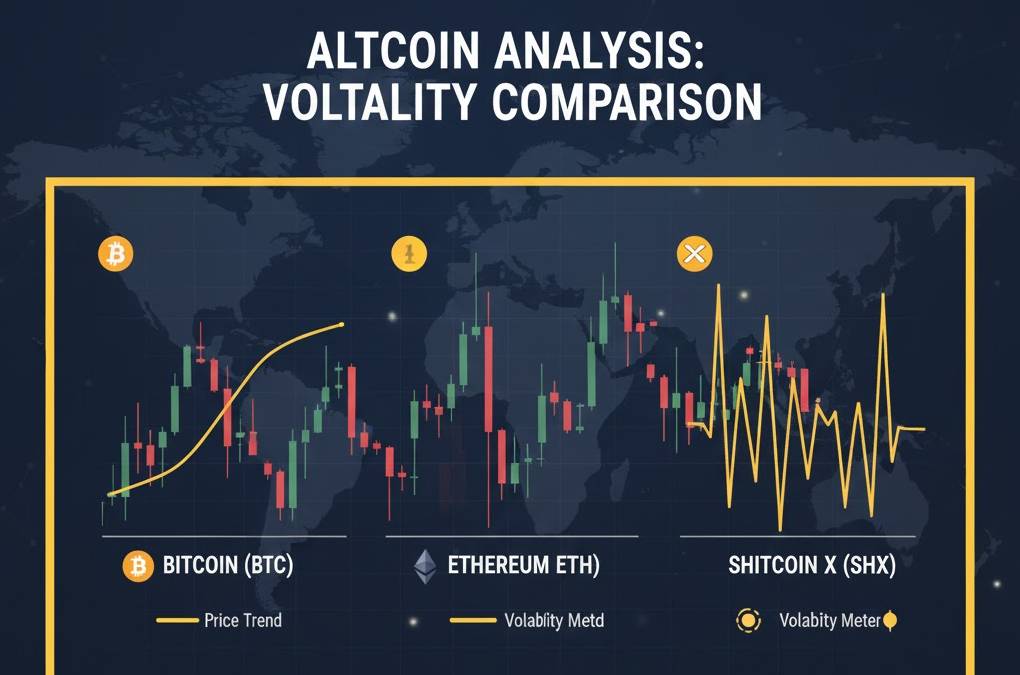
Altcoin Analysis: How to Evaluate New Cryptocurrencies
Master altcoin analysis: evaluate projects, assess tokenomics, identify risks, and make informed decisions about investing in alternative cryptocurrencies.
Altcoin Analysis: Evaluate Cryptocurrencies
Altcoins offer enormous upside potential but carry extreme risks. Most fail, yet some generate thousand-fold returns. This comprehensive guide teaches you how to analyze altcoins systematically, identify promising projects, and avoid obvious scams. Learn the frameworks professional investors use to evaluate blockchain projects.
What Are Altcoins?
Definition and Categories
Altcoins are any cryptocurrencies other than Bitcoin. The term encompasses thousands of projects with wildly different purposes, technologies, and viability. Ethereum, launched in 2015, was once an altcoin. Today, it's the second-largest cryptocurrency by market cap.
Altcoins fall into several categories:
- Layer 1 Blockchains: Alternative to Bitcoin and Ethereum (Solana, Cardano, Polygon)
- DeFi Protocols: Decentralized finance applications (Uniswap, Aave, MakerDAO)
- Payment Coins: Designed for transactions (Monero, Dash, Litecoin)
- Utility Tokens: Access to specific platforms or services
- Meme Coins: Community-driven, typically low utility (Dogecoin, Shiba Inu)
- Infrastructure Tokens: Support blockchain networks (Filecoin, Helium)
Why Altcoins Matter
Bitcoin and Ethereum dominate by market cap but represent only two solutions. Altcoins explore different approaches: faster transactions, lower costs, specialized features, or entirely new use cases. Some altcoins will ultimately fail; others will become world-changing platforms worth trillions.
Investing exclusively in Bitcoin and Ethereum eliminates upside from breakthrough projects. However, altcoin investing requires sophisticated analysis—most fail, and identifying winners before they appreciate dramatically is the challenge.
Fundamental Analysis Framework
1. Understanding the Project Purpose
Start by asking: What problem does this project solve? Is the problem significant and real?
For example:
- Solana: Problem: Ethereum is slow and expensive. Solution: High-speed blockchain for 65,000 transactions per second
- Chainlink: Problem: Blockchains can't access real-world data. Solution: Oracle network bringing external data on-chain
- Uniswap: Problem: Cryptocurrency exchanges are centralized and restrict access. Solution: Decentralized exchange run by smart contracts
Weak projects solve non-problems or offer inferior solutions to existing ones. If the project doesn't clearly articulate its advantage, it's suspect.
2. Analyzing the Team
The team is everything in early-stage projects. Great technology with an unknown team often fails. Mediocre technology with an exceptional team frequently succeeds.
Evaluate the team by:
- Track Record: Have founders successfully built other projects? Do they have domain expertise?
- Transparency: Do they publicly identify themselves and appear credible? Anonymous teams aren't automatically bad but add risk
- Experience: Experience at top tech companies (Google, Facebook, MIT) suggests capability
- Full-Time Commitment: Are founders fully dedicated or divided among multiple projects?
- Communication: Do they actively update the community and explain decisions?
- Token Holdings: Do founders hold significant tokens? (Alignment of interests) Do they have long vesting schedules showing commitment?
Red flags: Completely anonymous teams with no track record, founders with histories of failed projects or scams, teams building multiple projects simultaneously.
3. Technological Analysis
Understanding the technology helps assess viability. You don't need to be a developer, but basic comprehension matters.
Key technological questions:
- Consensus Mechanism: How does it validate transactions? (Proof of Work, Proof of Stake, etc.)
- Scalability: Can it handle millions of transactions? What's the maximum throughput?
- Security: Has the code been audited by reputable firms? Are there known vulnerabilities?
- Novel Innovation: Does it introduce genuinely new technology or just copy existing approaches?
- Code Quality: Is the GitHub repository active with regular updates? Do developers respond to issues?
Tools for technical assessment:
- Read the whitepaper (usually technical but necessary)
- Check GitHub activity and code history
- Look for audit reports from firms like Trail of Bits or CertiK
- Join technical Discord communities and ask developers questions
- Review testnet performance data
Tokenomics Analysis
What Are Tokenomics?
Tokenomics refers to the economic design of a cryptocurrency's token. Poor tokenomics can doom even excellent projects. Great tokenomics reward early adopters and encourage network growth.
Key Tokenomic Metrics
| Metric | Importance | What to Look For |
|---|---|---|
| Total Supply | High | Fixed cap is better than unlimited |
| Circulating Supply | High | Proportion of total currently in circulation |
| Inflation Rate | High | How much new token is created annually? |
| Founder Allocation | High | % held by founders (excessive % is bad) |
| Vesting Schedule | High | When can founders sell? Long schedules preferred |
| Emission Schedule | Medium | How are new tokens released? |
Identifying Problematic Tokenomics
Massive Inflation: Some projects mint 100% of supply in year one, creating downward price pressure. If inflation outpaces adoption, price struggles.
Founder Dumps: If founders hold 50% and have no vesting schedule, they can crash price by selling. Vesting schedules (tokens unlock over 2-4 years) align founder interests with long-term success.
Unfair Initial Distribution: If early insiders received tokens at 1/100th the public price, they'll sell immediately at a profit, crushing price. Fair distributions encourage long-term thinking.
Hidden Supply: Projects that conceal actual supply or introduce surprise supply increases are dishonest. Transparency is essential.
Positive Tokenomic Signs
- Fixed maximum supply with clear emission schedule
- Moderate annual inflation (2-5% is reasonable)
- Founder vesting over 3-4 years
- Founder allocation reasonable relative to community (20-30% for founders, 70-80% community)
- Clear governance structure if token holders vote on decisions
- Utility reasons to hold tokens (staking, governance, access)
Adoption and Growth Metrics
User Metrics
Ultimately, cryptocurrency success depends on adoption. Metrics indicating real usage matter more than hype.
- Active Addresses: How many unique addresses transact daily/monthly?
- Transaction Volume: Total transaction value per day
- Developer Activity: GitHub commits and activity (indicates ongoing development)
- Community Size: Discord/Telegram members, Twitter followers (early indicator, but easily manipulated)
Network Metrics
For blockchain platforms, network metrics reveal health:
- Total Value Locked (TVL): For DeFi, how much capital is deployed on the protocol?
- Network Throughput: Transactions per second actually processing
- Block Time: How quickly are blocks created? (faster = more responsive)
- Decentralization: How many independent validators/nodes run the network?
Comparing Growth Metrics
Projects with growing adoption show:
- Increasing active addresses over time
- Rising transaction volume
- Expanding developer community
- Real partnerships with legitimate projects
- Integration into exchanges and wallets
Stagnant or declining metrics suggest the project is losing momentum—often a sign to exit positions before price falls.
Risk Assessment
Project-Specific Risks
- Technical Risk: Can they execute their roadmap? Do they face unsolved technical challenges?
- Team Risk: Could key people leave? Is the team's vision sound?
- Market Risk: Is the problem they're solving becoming irrelevant? Are better competitors emerging?
- Regulatory Risk: Could government action threaten the project?
- Smart Contract Risk: Have audits found critical vulnerabilities?
- Liquidity Risk: Can you easily sell your position if needed?
Market Risks
- Crypto Market Cycles: Bear markets can crash 80-90% from peaks. Projects that seemed promising in bull markets fail in downturns
- Correlation Risk: Altcoins typically move together with Bitcoin
- Contagion Risk: Major crypto failure or hack can crash entire market
Common Scams and Red Flags
Avoid projects exhibiting these warning signs:
- Guaranteed Returns: Promises of specific returns (e.g., "guaranteed 10% monthly")
- Pyramid Schemes: Rewards for recruiting others, not for actual usage
- Plagiarized Whitepapers: Copying others' work without credit indicates dishonesty
- Celebrity Endorsements: Celebrities often promote projects they don't understand (and sometimes get paid)
- Social Media Hype: Excessive promotion without fundamentals
- Unrealistic Promises: "Revolutionary" claims without proof
- Pressure to Buy Quickly: "Limited opportunity" or "presale ending soon" tactics
- Lack of Transparency: Unwilling to answer questions about technology or tokenomics
Valuation Methods
Market Capitalization
Market cap (price × circulating supply) shows project size but not fairness. A $1 billion market cap for a novel Layer 1 blockchain might be cheap; the same valuation for a me-too DeFi clone is expensive.
Comparison with Peers
Compare projects in the same category:
- Solana ($50B) vs Cardano ($25B): Solana has higher throughput but less security; Cardano is slower but more thoroughly researched
- Uniswap ($10B) vs SushiSwap ($1B): Similar functionality, but Uniswap has larger liquidity and user base
Higher market cap often reflects more adoption, developer support, and ecosystem maturity. But newer, cheaper projects can still have 10-100x upside potential.
Fundamental Valuation
Some projects generate cash flow (staking rewards, fees) making dividend discount models applicable. Others create value through adoption potential, harder to quantify numerically.
For DeFi protocols, dividing market cap by annual fees reveals valuation multiples. A protocol with $100M annual revenue and $10B market cap (100x P/E) may be expensive vs one with $500M revenue and $10B market cap (20x P/E).
Due Diligence Checklist
Before investing in any altcoin:
- ☐ Understand the project's purpose and why it matters
- ☐ Research the founding team's track record
- ☐ Read the whitepaper (at least the introduction)
- ☐ Check for security audits and review audit reports
- ☐ Analyze tokenomics (supply, vesting, distribution)
- ☐ Review GitHub activity and code quality
- ☐ Examine adoption metrics and growth trends
- ☐ Identify competitive advantages vs alternatives
- ☐ Assess regulatory risks for the jurisdiction
- ☐ Join community (Discord/Telegram) and listen to discussions
- ☐ Check exchange listings and liquidity
- ☐ Compare valuation to similar projects
- ☐ Identify key risks and mitigation factors
- ☐ Verify you understand how to safely store/manage the token
- ☐ Only invest what you can afford to lose completely
Building an Altcoin Portfolio
Allocation Strategy
Altcoin allocation depends on risk tolerance. A typical crypto portfolio might allocate:
- 50-60% Bitcoin (safest, most established)
- 20-30% Ethereum (most proven altcoin)
- 10-20% Established altcoins (Solana, Cardano, Chainlink)
- 0-10% High-risk/high-upside altcoins (emerging projects)
Higher risk tolerance might allocate more to speculative altcoins. Conservative investors might skip emerging altcoins entirely.
Diversification
Don't concentrate in one altcoin. If you allocate 10% to altcoins, spread it: 3% each to three projects, or 2% each to five projects. This prevents single project failure from devastating your portfolio.
Position Sizing
Smaller initial investments reduce risk. Buy a position, observe for 3-6 months, then decide whether to add more or exit. Many successful altcoin investors size initial positions at 1-2% of portfolio, then increase if thesis validates.
Monitoring Your Investments
Regular Review
Monthly or quarterly, review each holding:
- Are adoption metrics still positive?
- Is development progressing on schedule?
- Has the team changed significantly?
- Are competitors gaining ground?
- Are regulatory threats emerging?
Exit Signals
Consider exiting if:
- Original investment thesis has fundamentally changed
- Key team members leave
- Adoption metrics decline or stagnate
- A superior competitor emerges
- Serious security vulnerabilities are discovered
- Regulatory action threatens the project
- Project price has appreciated 5-10x and you've reached profit goals
Taking Profits
If an altcoin investment appreciates significantly, consider taking partial profits. Selling 20-30% after a 5x return locks in gains while letting remaining position run. This removes emotion from the process.
Learning Resources
Improve your altcoin analysis skills with these resources:
- CoinMarketCap & CoinGecko: Basic metrics and project information
- Glassnode: On-chain metrics and network analysis
- Messari: Crypto research and project analysis
- GitHub: Review actual code and development activity
- Project Discord/Forums: Direct communication with teams and communities
- Twitter Crypto Community: Real-time discussions and analysis (but watch for scams)
- Academic Papers: For understanding novel technical approaches
Conclusion
Altcoin analysis requires combining fundamental research, tokenomic evaluation, growth metrics, and risk assessment. The most successful altcoin investors spend dozens of hours researching before investing. They focus on projects solving real problems with exceptional teams and healthy tokenomics.
Remember: most altcoins fail. Expect 70-80% of speculative altcoin positions to lose money. Success comes from finding the 20-30% that don't just survive but thrive. Invest only what you can afford to lose completely, diversify across multiple projects, and focus on understanding what you're actually buying. With disciplined analysis and patience, altcoin investing can be remarkably profitable—but only for investors willing to do their homework.